

Packaging Resources & Buyer Guides
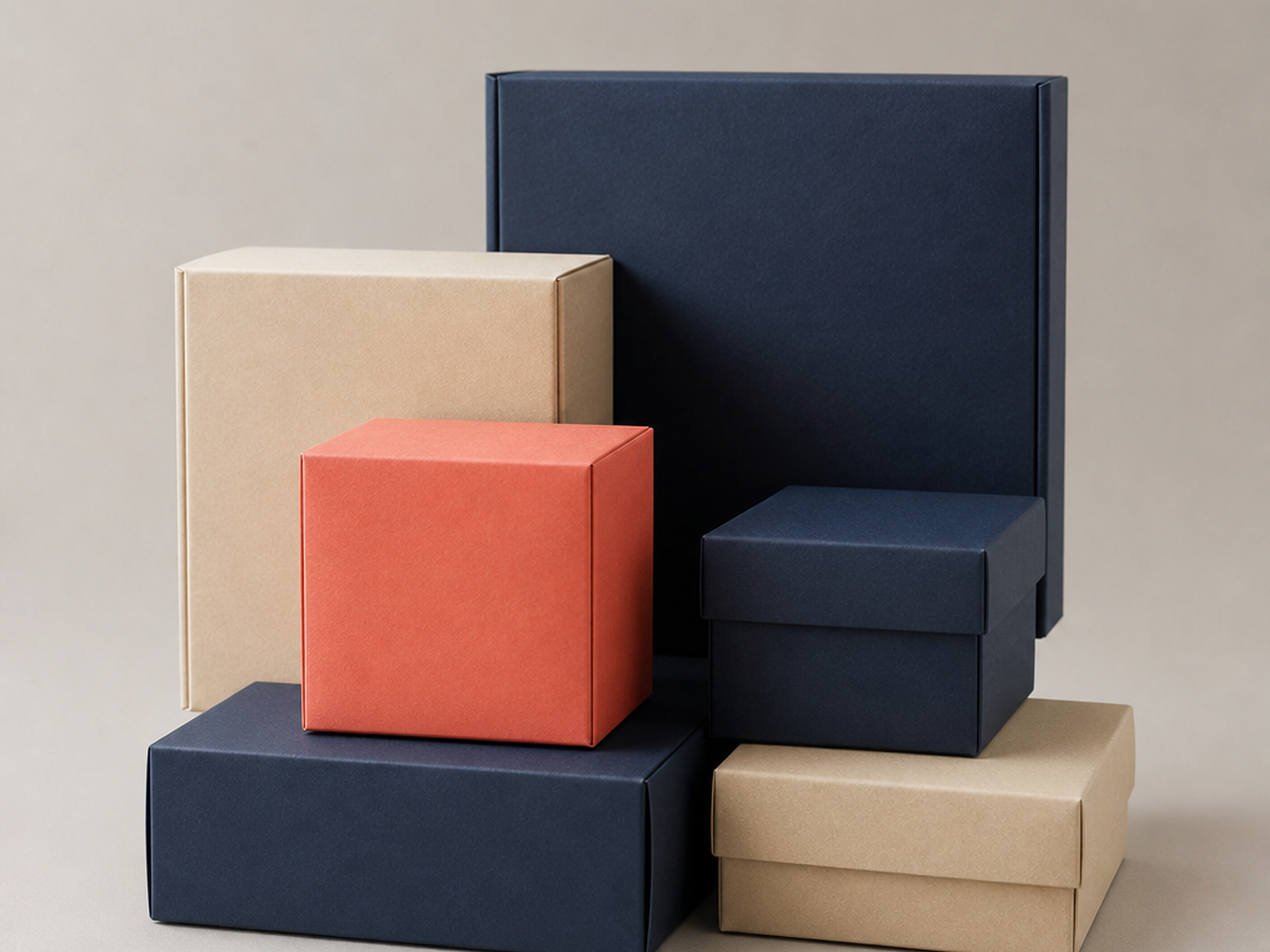
Everything You Need Before You Order
Specifying custom packaging involves a series of connected decisions: dimensions, material, print method, finishing, quantity, and artwork. Each one affects the others and the final cost per unit. These guides break those decisions down in plain language so you can walk into a quote knowing what you need.
They reflect capabilities we actually offer — custom dimensions, offset, digital, and flexographic printing, PMS color matching, a range of board and kraft materials, and finishing such as matte, gloss, soft-touch, spot UV, foil, and embossing. Where relevant, we note pilot minimums (from 100 units, or 250 for rigid styles).
How the Guides Fit Together
These guides follow the real order of a packaging decision. You start by choosing a size — our size and measuring guides cover internal versus external dimensions and how to measure a product's true footprint. Next comes material, where the materials guide compares corrugated, cardstock, kraft, and rigid by strength, print quality, and feel. With size and material set, the printing-methods and finishes guides explain how your artwork is reproduced and how the box ultimately looks and feels.
The remaining guides address the commercial side. The cost guide breaks down the levers that move per-unit price; the MOQ guide explains minimums and our pilot quantities of 100 units (250 for rigid); the artwork and RFQ guides help you prepare files and request an accurate quote quickly. Read together, they take you from a rough idea to a well-specified box you can order with confidence. Everything reflects capabilities we actually offer, and where we can't substantiate a claim, we say so.
Frequently Asked Questions
Where should I start if I've never ordered custom boxes?
Do these guides list prices?
Can someone help me apply these guides to my product?
Using the Guides With Templates and Samples
The guides are most useful alongside two other tools. Our brand-neutral dieline templates let you see how a chosen style folds flat and where the printable panels sit, which makes the sizing and artwork guides concrete rather than abstract. Drop your dimensions into the logic the size guide describes, sketch against a template, and you have a rough layout before you ever open a design file.
A physical sample closes the loop. Reading about caliper, coatings, and finishes tells you what is possible, but holding a sample tells you how a box actually feels and how your colors print on the real stock. For most styles we can produce a sample before a full run, so you can confirm the decisions these guides helped you make. If you get stuck at any step, the fastest path is to send what you know through the quote form — even a partial spec lets a specialist fill the gaps and point you back to the right guide.